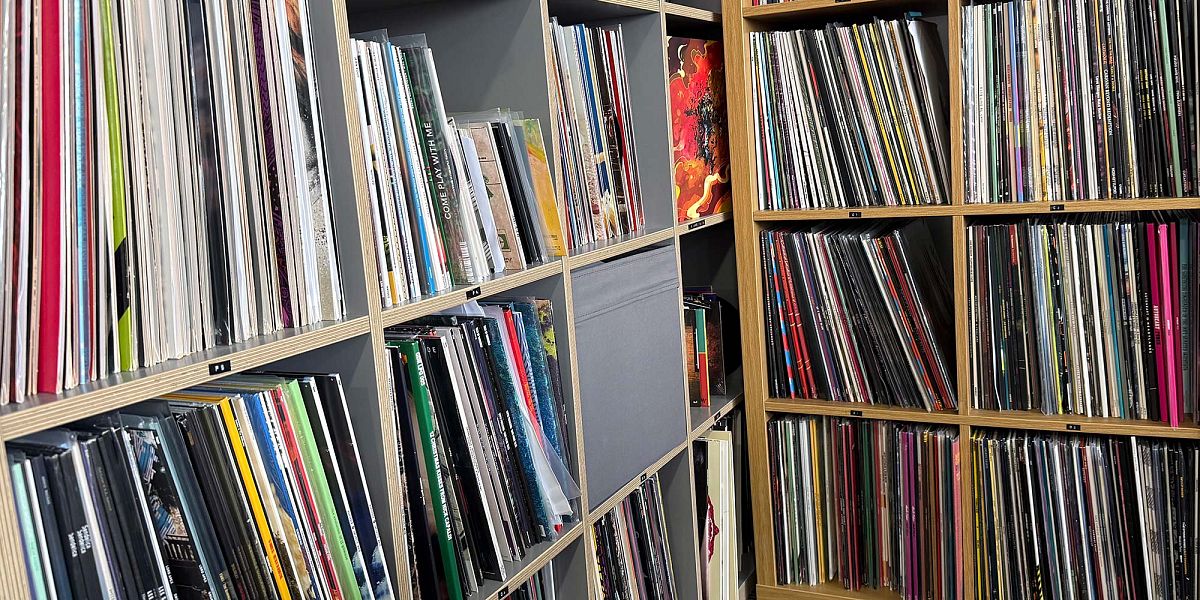
Hot weather and vinyl records: How to protect your collection during the summer heat
Vinyl records are surprisingly resilient but like all plastics, they have their limits. Every summer, the same question comes up, “Can my records survive a heatwave?” The short answer is yes; provided they're stored sensibly. Discover below what really happens when records get too hot, and how to keep your collection safe during the summer months.
Despite being pressed at temperatures of around 150°C, finished records are surprisingly sensitive to heat. That's because the pressing process and the finished product are two very different things. Once a record has cooled, excessive heat can permanently change its shape and, in extreme cases, even its material properties. Fortunately, it takes more than a warm room to cause real damage.
Heat is the real enemy
Vinyl records are made from a PVC based compound, a material which has thermoplastic properties. Thermoplastics gradually soften as their temperature rises and then harden as they cool. For everyday use, the important number isn't the melting point, but the temperature at which the material starts to lose its rigidity. As a practical guideline, prolonged exposure above about 30°C (86°F) should be avoided whenever possible, even though this alone is unlikely to cause damage. The real danger begins when the record itself approaches 45°C (113°F). At this point, the material becomes noticeably softer and much more susceptible to permanent deformation. At around 57°C (135°F), the PVC compound itself begins to undergo chemical changes that can permanently affect the material. Those temperatures are surprisingly easy to reach. A record left in direct sunlight or inside a parked car on a warm day can exceed 70°C (158°F) in less than an hour - even when the outside air temperature feels perfectly reasonable.
Worry about shipping; but not too much
Many collectors assume that records are most at risk while travelling through courier networks during the summer. There is some truth in this, although in reality, heat damage during transport is relatively rare. Records spend most of their journey inside an inner sleeve, an outer jacket, a shipping carton and frequently a second outer box, surrounded by many other parcels. Together, these layers provide effective insulation and slow down temperature changes considerably. Only in exceptional situations - such as prolonged storage in an uncooled warehouse during extreme weather - is transport likely to become a genuine concern. Ironically, the greatest risk often comes after delivery or purchase. A parcel left on a sunny doorstep, in a conservatory or inside a car can heat up far more quickly than it ever would inside a delivery truck.
Why heat can permanently warp a record
One common misconception is that heat alone ‘creates’ a warp. In reality, every pressed record contains tiny internal stresses that become locked into the material during manufacture. These are a normal part of the pressing process and result from slight differences in pressure, cooling, material flow and the interaction of the different materials that make up the finished record.
One often overlooked example is the paper labels. Unlike vinyl, paper absorbs moisture from the air. During rapid changes in temperature, warm, humid air can condense on a cooler record before the vinyl has fully warmed up. As the labels absorb this moisture, they expand slightly. Because paper doesn't expand equally in every direction - and the labels on the two sides are rarely aligned in exactly the same fibre direction - these small movements can add to the internal stresses within the record.
Under normal conditions these forces are extremely small and remain perfectly balanced. However, as the vinyl softens under excessive heat, those locked-in tensions are free to redistribute. Instead of remaining perfectly flat, the record may settle into a slightly different shape. This is why a record that has warped in the heat often doesn't return completely to its original form after cooling. The important point is that heat is the trigger - but the stresses were already there. Preventing excessive heating is therefore far easier than trying to reverse the damage later.
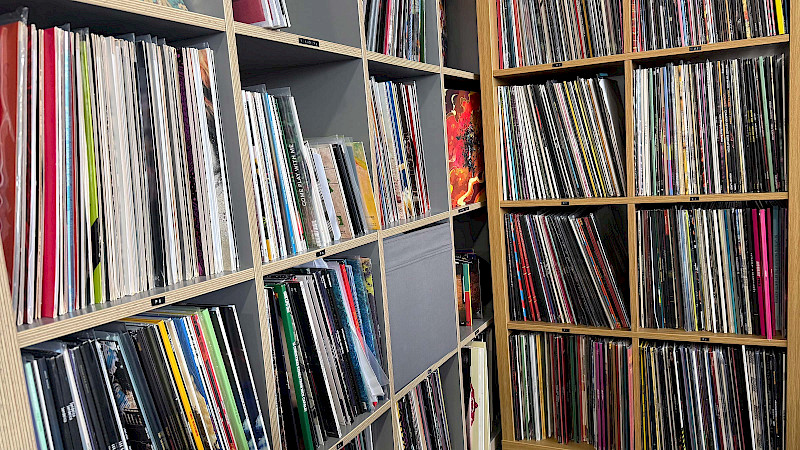
Five ways to protect your records this summer
- Keep records out of direct sunlight. Sunlight is far more dangerous than warm air alone. Even if your room feels comfortable, a windowsill or shelf beside a south facing window can become hot enough to damage vinyl.
- Never leave records in a parked car. This remains one of the commonest and quickest ways to ruin a record. Interior temperatures of 50–70°C (122–158°F) are common on sunny days, even when it's only moderately warm outside.
- Store records upright. Always keep records vertically on sturdy shelving. Upright storage reduces mechanical stress and exposes less surface area to radiant heat than stacking records flat.
- Choose the coolest room in the house. The ideal storage temperature is around 15–21°C (59–70°F). If your home doesn't have air conditioning, keep records away from loft spaces, radiators and top shelves, where warm air naturally accumulates.
- Avoid sudden temperature changes. Gradual seasonal changes are rarely a problem. Rapid swings in temperature and humidity place more stress on the material. If records arrive from a very hot or very cold environment, allow them to acclimatise before playing them.
To summarise; a little care goes a long way. The good news is that vinyl is tougher than its reputation suggests. Most collections will never experience the temperatures required to cause permanent damage. Keep your records cool, upright and out of direct sunlight, and they'll continue to perform exactly as intended for decades to come. During a heatwave, the biggest threat isn't the delivery truck, it's usually the parked car, the sunny windowsill or the forgotten parcel on the doorstep.
More articles from Breed
Heat and Vinyl Records FAQs
Usually not. A room temperature of 30°C is uncomfortable but rarely dangerous for vinyl. The real risk comes from direct sunlight or enclosed spaces where the record itself can heat up well beyond the surrounding air temperature.
Prolonged storage above 30°C (86°F) should be avoided where possible. Around 45°C (113°F), the material becomes soft enough for permanent deformation (warping) to occur, while temperatures above 57°C (135°F) can begin to alter the chemical composition of the PVC compound itself.
Not too much. Packaging provides surprisingly good insulation, and heat damage during transport is relatively uncommon. Once the parcel has been delivered, however, avoid leaving it in direct sunlight or inside a hot vehicle.
Every record contains slightly different internal stresses from the manufacturing process. Heat allows those stresses to redistribute, which is why some records deform more readily than others under the same conditions.
Keep records upright, cool and out of direct sunlight. Avoid parked cars, windowsills and other places where temperatures can rise far above the surrounding air.
Breed Media quality vinyl manufacture
At Breed Media, we work with proven pressing partners who apply strict quality control throughout the pressing process ensuring that your finished records will be as durable as possible. We can't control how your fans will look after and store the records we manufacture but we'll make sure that they're perfect when you receive them.