Bio-attributed vinyl: What’s actually behind the “BioVinyl” name?
You may have noticed a growing number of records marketed as being pressed on “BioVinyl”. The term suggests a new, petroleum-free material; but is that really the case and what actually changes in the production process? To help explain what’s behind the name BioVinyl we're going to take a step back to look at how vinyl - the material itself - is usually made and then explain what makes bio-attributed vinyl different.
From salt and oil to Vinyl
Vinyl records are made from polyvinyl chloride (PVC), but the term “vinyl” can be a bit misleading. The raw compound used for pressing records typically consists of 80–85% PVC, with the rest made up of co-polymers (PVAc), which are additives such as stabilisers, pigments and fillers. PVC itself is produced from two key ingredients: chlorine and ethylene. Chlorine is usually derived from rock salt through electrolysis, and in Europe this rock salt often comes from deep underground deposits in the Epe region of German. Ethylene, on the other hand, is typically obtained from crude oil through a petrochemical process known as steam cracking, which breaks long-chain hydrocarbons down into smaller molecules such as ethylene and propylene. Ethylene doesn’t have to come from fossil sources however, as it can also be produced from renewable or recycled feedstocks, such as used cooking oil, wood-processing waste, or industrial gases.
The chemistry stays the same
In the next steps of PVC production, combined chlorine and ethylene to form ethylene dichloride (EDC), which is then converted into vinyl chloride monomer (VCM), which is in turn polymerised to create PVC. In terms of chemistry this process is identical, regardless of whether the ethylene originates from fossil or renewable sources. That’s the key point; there is no “new” material involved. The final product is still PVC - unchanged in structure, performance, and sound quality.
So what is “Bio-Attributed” vinyl?
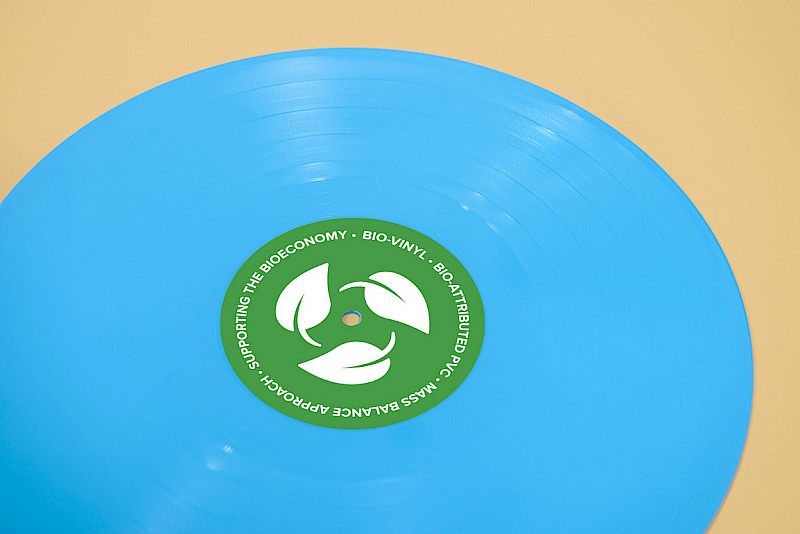
What’s often marketed as “BioVinyl” is more accurately described as bio-attributed vinyl. In this case, part of the ethylene used in PVC production is derived from renewable or recycled sources, such as used cooking oil. This bio-based input is allocated via a mass balance system, meaning that while not every individual pellet is physically traceable, the overall production is certified to contain a defined percentage of renewable feedstock. The result is a material that is chemically identical to conventional PVC, but produced with a significantly reduced carbon footprint. Certification systems such as ISCC Plus ensure that both material sourcing and processing meet independently verified sustainability standards.
Why the name matters
The term “BioVinyl” is widely used in marketing, but it can be misleading. It suggests a fundamentally different, even biodegradable material, which is not the case. The records are still made from PVC and behave exactly like conventional vinyl in production, playback, and recycling. A more accurate term is therefore bio-attributed vinyl, which reflects what actually changes: not the chemistry, but the source of some of the raw materials. The use of the term “BioVinyl” is increasingly problematic because it falls into a regulatory grey area and may be considered misleading under EU legislation, and is restricted by the ECGT (Empowering Consumers for the Green Transition) and Greenwashing Directive. It still appears in public, however, because it remains a trade name established by a single PVC supplier.
No compromises in Sound or Production
One of the major advantages of bio-attributed vinyl is that it requires no changes in manufacturing. Pressing plants can process the material exactly like conventional vinyl, with no need for new equipment or adjustments. The physical properties remain identical, meaning there are no differences in sound quality, durability, or handling. This makes it a practical step toward more sustainable production - without introducing risk or variability into the process.
Sustainability in context
Compared to traditional PVC, bio-attributed vinyl offers a clear environmental benefit by reducing reliance on fossil resources and lowering CO₂ emissions, however, it’s not the only approach. Using recycled vinyl compounds (often referred to as re-vinyl) can, in some cases, offer an even better environmental footprint on a per-record basis - provided the material quality is carefully controlled. Another option is injection moulded records made from PET (polyethylene terephthalate), which significantly reduces energy usage in record manufacturing and therefore has an even lower carbon footprint.
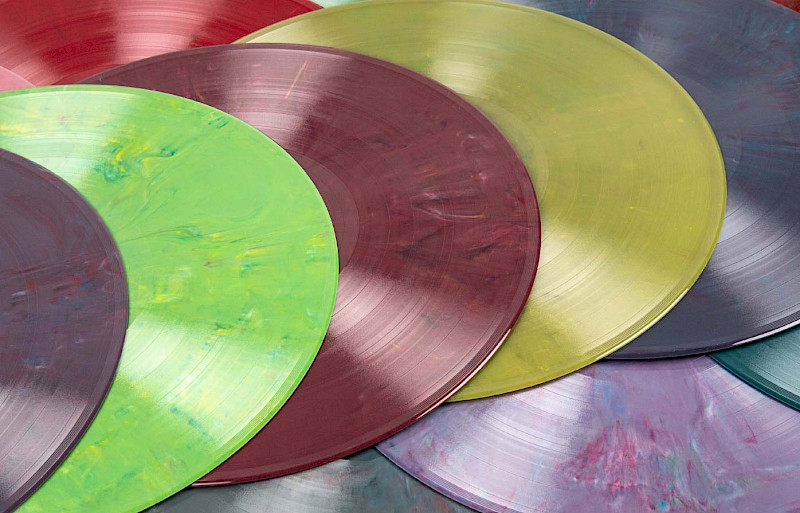
All these examples represent different approaches with different strengths. PET avoids PVC entirely and reduces energy use during moulding. Bio-attributed PVC reduces fossil inputs. Reground/recycled PVC reduces virgin PVC use. Each method addresses different parts of the production footprint. Still, bio-attributed vinyl represents an important development: it scales well, integrates seamlessly into existing production, and maintains consistent quality. Beyond records, similar materials are already being used in industries such as medical manufacturing, including products like blood bags - an indication of how broadly this shift is expected to expand.
More articles from Breed
FAQs on BioVinyl or Bio-Attributed Vinyl
No. It’s still standard Polyvinyl Chloride (PVC) howeverf some of the raw material comes from renewable or recycled sources.
No. The chemical composition and physical properties are identical, so playback quality remains unchanged.
Because it can be misleading and is restricted under EU regulations since originated as a trade name, not a technical definition.
Depending on the process, the carbon footprint is reduced in comparison to fossil based PVC and it is not made from fossil sources.
Yes. Bio-attributed vinyl can be processed within the same PVC recycling streams as conventional records.
Why you should use Breed for Bio-attributed Vinyl
At Breed Media we are consistantly leading the way when it come to introducing more sustainable materials and practices such as card based CD packaging, encouraging the use of FSC certified materials for paper and card or adopting vegatable based inks. Now after the huge revival of interst in vinyl records we're at the forefront of introducing a range of new record pressing technologies such as bio-attributed vinyl, re-vinyl and injected moulded records. Get on touch with the team so we can advise you on the latest in sustainable vinyl pressing technologies.