DMM vs Lacquer vinyl record cutting: Two paths to the Perfect Groove
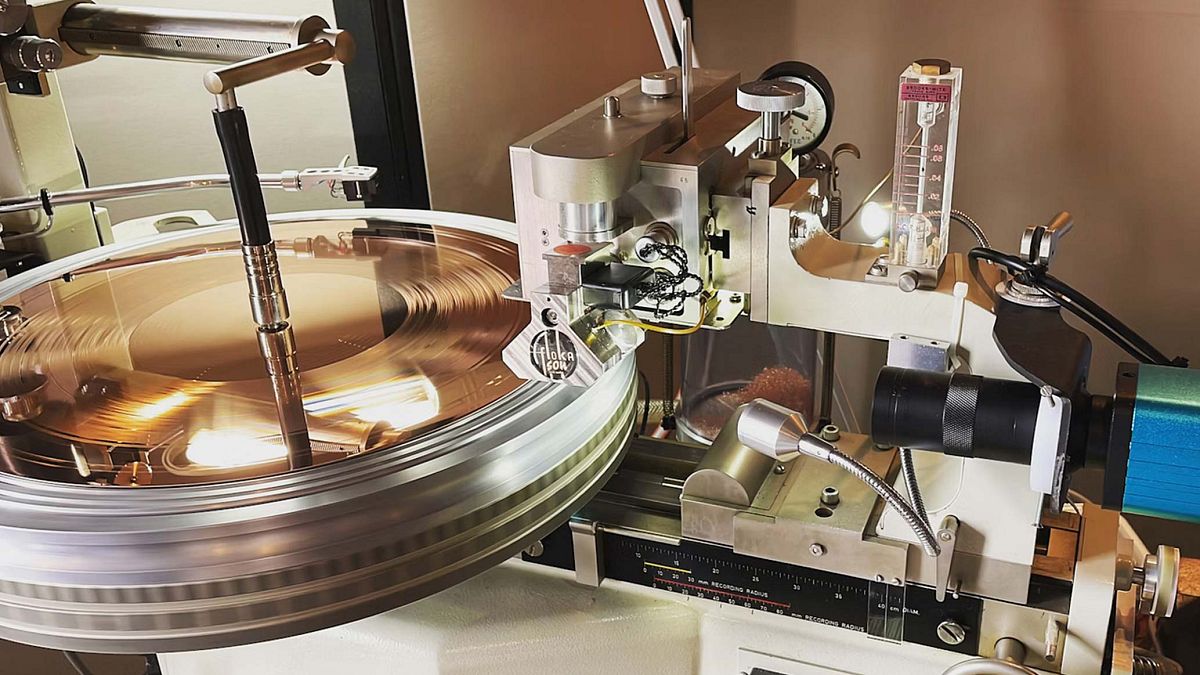
In simple terms a cutting lathe works like a record player in reverse. The audio is converted to mechanical motion by two electrical moving coils which move the cutting stylus laterally and vertically as it engraves a microscopic, v-shaped groove into a base material. Today there are two primaru methods for producing these original masters: lacquer cutting and Direct Metal Mastering (DMM). Both aim for the same goal - capturing audio information in a physical groove - but they achieve it in very different ways.
Lacquer Cutting: The classic method
In the traditional lacquer process, the groove is cut into an aluminum disc coated with a polymer layer - specifically made from nitrocellulose - the lacquer. The exact formulation of this coating remains a closely guarded secret. Though perhaps not quite as legendary as the recipe for Coca-Cola, it is the case that today, only one manufacturer worldwide produces these lacquer discs.
Cutting is typically performed using ruby styli mounted on a precision cutting lathe. The cut is made by a heated stylus ploughing into the surface. The term cutting is therefore not really accurate. Once the lacquer master is complete, the pressing plates are created through three electroplating steps:
- Father – a negative metal copy of the lacquer
- Mother – a positive copy made from the father
- Stamper – another negative, this time derived from the mother and used for actually pressing records
The mother plays a crucial role in quality control. Unlike the delicate lacquer master - which would be damaged by playback - the mother can be played to check for errors before stampers are produced.
Direct Metal Mastering (DMM) - The newer alternative
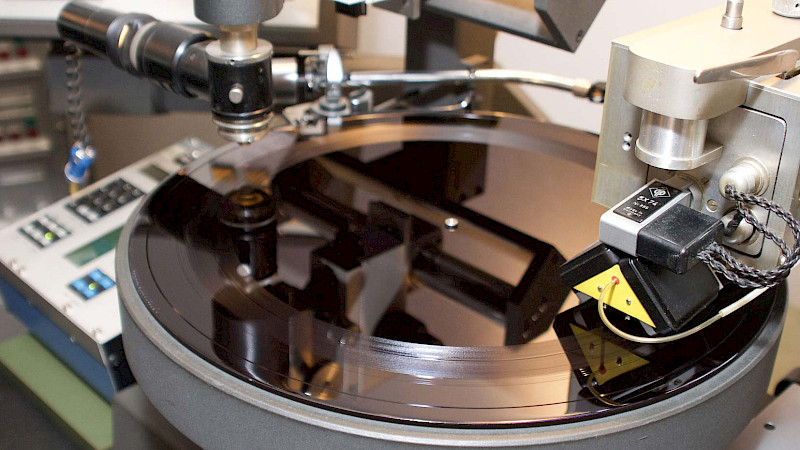
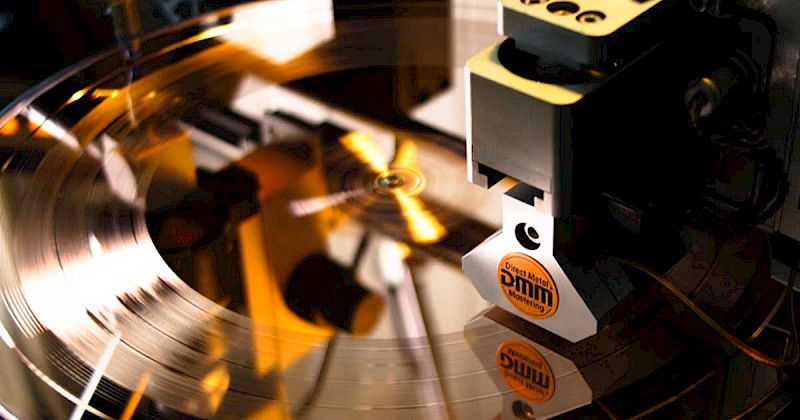
Direct Metal Mastering (DMM) emerged in the early 1980s through a collaboration between the lathe manufacturer Neumann and the record company Teldec. Instead of cutting into the soft lacquer, the groove is engraved directly into a stainless-steel disc coated with copper phosphate. Because of the greater hardness of the material, the process requires natural diamond styli. The cut is made with a cold stylus, leaving swarf that is sucked away from the surface while cutting.
With DMM, the cut is made directly into metal, effectively producing a mother immediately. From this metal master, both stampers and safety fathers can be created. The safety fathers are effectively copies that allow additional mothers to be produced without repeating the cutting process; this is one of DMM’s major practical advantages allowing mothers to be sent to multiple pressing plants.
By eliminating the first electroplating step required for lacquer, DMM reduces both workload and potential sources of error as each plating stage carries the risk of contamination, which can lead to audible defects such as pops, clicks, or dropouts.
Another advantage is that pressing plants can manufacture DMM blanks themselves, making them independent from the limited global supply of lacquer discs. Depite this the cost savings are not as significant as they might at first appear. While DMM removes one electroplating step after cutting, a DMM blank must be produced beforehand, resulting in roughly the same number of plating processes overall.
How the Materials Shape the Sound
The different materials, soft lacquer versus hard copper, affect how the groove is formed and ultimately, how the record sounds. Because DMM cuts into a harder surface, the groove walls remain extremely stable. This often results in clearer and more precise reproduction of upper midrange and high frequencies. On the other hand Lacquer, being softer, allows deeper cuts, which can benefit recordings with strong bass content. This difference has led to the common perception that:
- DMM is sharper, brighter, or more analytical.
- Lacquer is warmer or smoother.
In reality, these perceived characteristics are very subjective and hugely influenced by the audio masters. From a purely physical perspective, DMM tends to introduce less distortion, while lacquer’s slight smoothing effect can make recordings sound less harsh.
The Pre-Echo question
Another technical aspect is the notorious pre-echo phenomenon. Pre-echo occurs when strong groove modulation pushes the groove wall into the adjacent revolution. As a result, faint audio from a loud passage can sometimes be heard one rotation before it actually occurs. Lacquer is more susceptible to this because the material can slightly flex or rebound after cutting. Engineers often compensate by widening the space between grooves at critical points - reducing the risk of pre-echo but also shortening possible playing time.
The harder surface of DMMs significantly reduces this risk of pr-echo, allowing grooves to be cut closer together. This can extend the playing times achievable for each side at a given volume. The playback time however, depends on many other factors: dynamics, stereo width, compression, frequency balance, and phase relationships so every project requires individual evaluation, and sometimes a test cut.
The Horn effect
Lacquer cutting produces a small but distinctive artifact known as a horn. As the stylus displaces the soft lacquer, a tiny ridge forms along the top of the groove wall similar to a bow wave. This ridge does contain some audio information but is mechanically unstable. When records slide into their inner sleeves, the horn can break off, causing the fine hairline marks often seen on new records. Because of this, the horn is typically polished away from the lacquer before plating. Find out more in our article on Dehorning and Polishing.
With DMM, the harder metal surface produces no horn at all, eliminating the issue entirely. This is just one factor that creates a divide between those who favour DMM and those who prefer lacquers. Musicologists regret the tiny loss of audio information whilst aesthetes appreciate records that look clean and scratch-free.
DMM vs Lacquer: There is no clear winer.
There is no definite superior trechnology or a universal rule about which music suits which cutting method. Nor can one reliably identify a record’s cutting process simply by looking at it - unless the information appears in the run-out groove - or listening to it.
Although DMM was adopted with enthusiasm when it was introduced, lacquer cutting remains the dominant method today and frequently preferred by musicians and labels. One practical reason is simple and echos one of the issues with lacquers; DMM lathes were produced by a single manufacturer and relatively few machines remain in operation.
There is also a certain romance to lacquer cutting. It represents the traditional craft of vinyl production, closely tied to the mythology of analogue sound, vinyl culture, one off acetates and exclusive dub plates. Whichever you choose it's interesting fact that despite the analogue nature of the cutting process and the record produced around 98% of modern vinyl cuts originate from digital recordings.
If you're intersted in finding out more about how vinyl records are manufactured why not read our article on How Vinyl Records are Made.
More articles from Breed
FAQs on DMM and Lacquer vinyl record cutting
Lacquer cutting engraves grooves into a soft nitrocellulose coating, while DMM cuts directly into a copper-coated metal disc.
Neither is universally better. DMM often offers greater precision, while lacquer can produce a smoother, warmer character.
Because it eliminates one electroplating step, reducing the chance of contamination that can cause clicks or dropouts.
Pre-echo is faint audio heard one revolution before a loud passage, caused by groove modulation affecting adjacent grooves.
These marks often come from the lacquer “horn” breaking off when the record slides into its sleeve - usually cosmetic and not audible.
Why Choose Breed Media for your DMM and Lacquer viny cutting?
At Breed Media our experienced staff understand the whole process of manufacturing a vinyl record and that includes cutting the record. Whatever type of music your cutting or the length of recording we can help you decide whether to go for DMM or Lacquer vinyl cutting how it may make a difference to the sound and when it probably won't make any differnce at all.