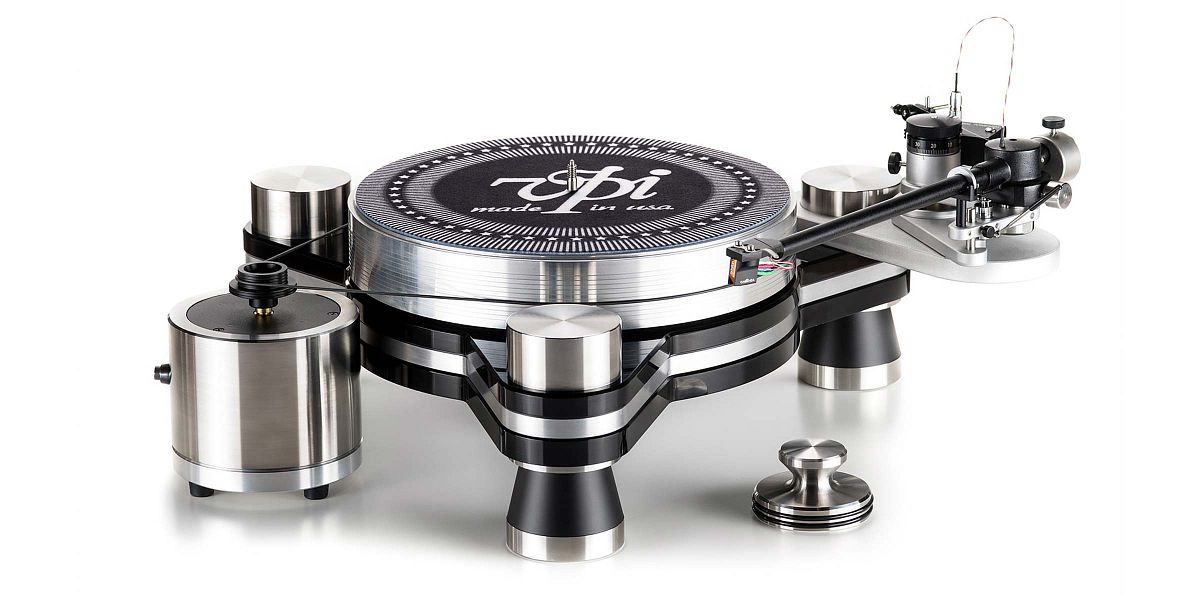
Vinyl Record Turntables: How they work and getting the most from your set up.
At the core of vinyl playback is the interaction between stylus and groove. The tiny diamond tip of the stylus traces microscopic modulations in the groove of the record at incredible speeds and forces, translating that movement into audio. Because this process is so sensitive, even small setup errors or unwanted vibrations can directly affect what you hear. So what are the main parts of a record player?
Platter and Tonearm: The key components of a turntable.
A record player can be broadly split into two primary components. Firstly there is the turntable itself consisting of the plinth (or chassis) the motor and the platter onto which the record is placed. Secondly there is the tonearm which holds the cartridge and the stylus which tracks the groove.
Tonearm and Cartridge: Getting the right match
The tonearm and cartridge need to work as a matched pair; the key is balancing the tonearm's effective mass against the compliance of the stylus suspension. If these are poorly matched, resonance occurs within the audible (or problematic) range, leading to distortion or unstable playback. The goal is to keep this resonance between 8 and 12 Hz, where it won’t interfere with music or be triggered by record warps. Beyond tonearm/cartridge compatibility, the correct setup is essential and even small adjustments here can transform the listening experience.
Turntable tonearm setup
- Tracking force (VTF): ensures the stylus sits properly in the groove
- Alignment: minimizes distortion across the record
- Vertical Tracking Angle (VTA): affects tonal balance
- Anti-skate: keeps pressure equal on both groove walls
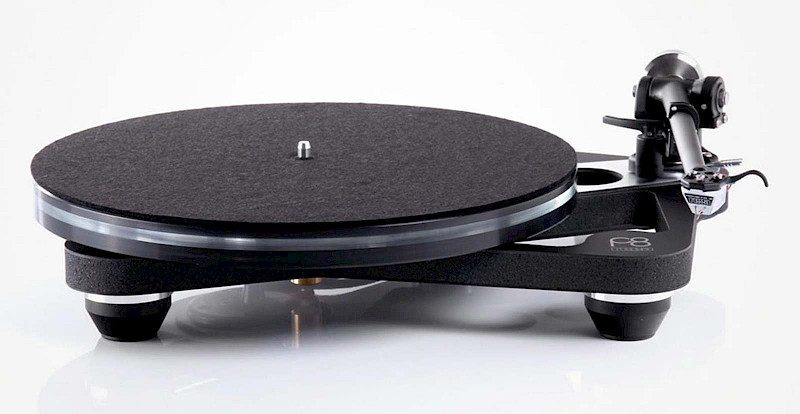
Turntable Drive Systems: Belt, Direct, and Friction Wheel
Turntables typically use one of three drive methods, each with distinct characteristics.
Belt Drive - A flexible belt connects motor and platter.
Pros: strong isolation from motor vibrations.
Cons: lower torque, slower startup.
Direct Drive - The motor is integrated into the platter.
Pros: high torque, excellent speed stability.
Cons: relies on complex electronics.
Friction Wheel Drive - A rubber-coated wheel transfers motion from the motor to the platter.
Pros: powerful drive, fast response.
Cons: stronger mechanical coupling can transmit vibration and requires precise maintenance.
Placement and Isolation: Why It Matters More Than You Think
Turntables are extremely sensitive to vibration. Everything from footsteps to the speaker's output can travel through flooring and furniture and be transfered to the stylus, where it gets amplified as unwanted noise. As a result where a turntable is positioned is an important consideration.
Wall Mounted
A wall-mounted shelf is often the best solution - especially in rooms with wooden floors. Why? Because:
- Walls (especially load-bearing ones) transmit less low-frequency vibration than floors
- They are far less affected by footsteps or movement
- They reduce feedback from speakers traveling through the floor structure
- That said, not all walls are equal. Lightweight drywall can resonate, while solid masonry walls perform much better.
Floor Mounted
If wall mounting is not an option then there are things you can do to reduce unwanted vibration.
- Use a heavy, rigid rack
- Use three contact points for stability
- Add mass (something heavy to the shelf) to lower resonance
- Experiment with isolation materials (rubber, cork, foam, or DIY solutions like squash balls, cut-in-half!) between the turntable and the surface.
Platter Mats: Small Change, Real Effect
The platter mat sits directly between record and turntable, making it a key interface for vibration control. Because vibrations reflect, scatter, and interfere at material boundaries, the mat subtly shapes the final sound so mats of different materials effect the sound in different ways.
- Soft materials (felt, cork, leather): absorb energy → smoother, slightly damped sound
- Hard materials (acrylic, metal): reflect energy → more detail, sometimes brighter sound
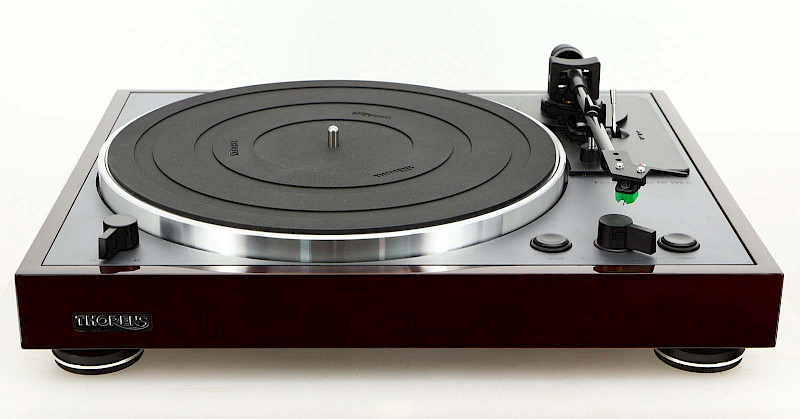
Vintage vs Modern Turntables
Vintage turntables from the 70s and 80s are often praised for their build quality, this is partly because they were produced in very large quantities so economy of scale allowed manufacturers to invest more in materials and engineering. This is also why designs like friction wheel drives are more commonly found in older models, whereas modern turntables tend to favor belt and direct drive systems for their simpler construction and lower noise potential.
Modern turntables however, do benefit from new improved materials and refined electronics. Neither is inherently “better” - it comes down to condition, design, and personal preference.
More articles from Breed
Record Player Turntables FAQs
No. A well-set-up affordable turntable can deliver excellent sound.
Cartridge and proper setup is far more impactful than most accessories
It isolates the turntable from floor vibrations, especially in rooms with flexible flooring.
Use a heavy base and experiment with simple materials like cork, rubber, or foam.
Yes, but subtly - they fine-tune rather than transform the sound.
Both can be excellent - focus on condition, setup, and how the design suits your needs.
Why Choose Breed Media for your Vinyl Manufacture
Understanding how a turntable works gives you a real appreciation of what goes into making a great record - because all of that careful listening starts with the quality of the pressing itself. A well-pressed record has consistent groove geometry, low surface noise, and a compound that holds detail across the full playing surface. At Breed Media, we apply strict quality control at every stage, from cutting and plating through to the final press. Get in touch and we'll help you get it right from the start.